Tuesday began with a session on how to improve Quickly, which is a tool to help Free as in...beginner programmers “quickly” get started on a new project. Most of the discussion revolved around porting to the new Python 3 hotness, including moving to PyGI from PyGTK. There was some talk of automatically converting users’ projects, but that seemed pretty high-risk so it’s more likely that the tool will advise the user to run 2to3 on their code if they wish to upgrade. There was also some discussion (again) of new project templates for Qt Quick, Vala, and Unity Lenses. (blueprint, notes)

Next was an introduction and Q&A session with the Ubuntu Desktop Design Team. Lots of things were discussed including how users can get involved and collaborate on designs, the settings that were removed from GNOME 3 which we need to add again (like choosing fonts, icon themes, etc.), and features for advanced users like multi-monitor support and focus-follows-mouse support. (blueprint, notes)

After that I was supposed to go to a session on improving the collaboration between Ubuntu and Linaro, but that seemed a lost cause as nobody from Ubuntu showed up (I don’t count since I don’t work on the distro). The meeting was postponed until they could convince someone to come. In the meantime I had a nice hallway discussion with Alex and Michael about personal backup solutions.

Last session before lunch was on infrastructure improvements for development release maintenance. The main thrust was that we have lots of tools to help find problems in the archive but they are all disconnected from each other and don’t provide a good overall picture of the problems that need to be addressed at any given time. Ideas included extending Harvest to be a more general place to assign/take tasks and setting up some automated upgrade testing. (blueprint, notes)

After lunch was a set of short talks. First up was a couple of guys from OpenStack talking about automated testing of code before allowing that code to be merged into their main tree. For functional and integration testing they have a slick tool which automatically sets up an Ubuntu machine with the software needed to run OpenStack and fires it up with the code to be tested.

Next was another OpenStack talk about DevStack, which is a script which allows you to quickly set up an OpenStack development environment.

Following that talk was the Steve George, the VP of Business Development for Canonical, talking about the need to bring consumer applications into Ubuntu if we want to reach a critical mass of users. The talk largely centered on developer.ubuntu.com and similar efforts to make it easy and attractive for developers to get their software into Ubuntu.

The final talk of the series was by a gentleman from Nokia discussing the Qt ecosystem. He mentioned that Qt is run by the Qt Project rather than Nokia itself, and that it’s already being used in many products including home media devices (I found out later that the PS3 Netflix application is written in Qt). He also talked about the features we can expect in Qt 5.0, due out in 2012.

Back to regular sessions, I attended the one on performance tuning and optimization for ARM servers. General consensus was that we shouldn’t turn on options just because certain websites say we should and that each candidate (kernel options, for example) should be investigated individually comparing real-world performance with and without before any decision is made. (blueprint, notes)

Next was a session on U-Boot improvements in Linaro. Lots of talk about what’s currently supported in U-Boot versus potential improvements that would be helpful to both Linaro and Ubuntu. Let me just say that I have never been to a discussion about bootloaders that was not terribly dry, and I’m typing this after having attended this one. (blueprint, notes)

My last session of the day was a demo put on by the Qt guys showing off some of their work in the embedded space. They demoed Qt Quick on Ubuntu core running on both a PandaBoard and a Tegra 2 board. They also had a hilarious interactive demo of a working calculator which spins in 3D and turns into a scene with a wheeled robot cruising around.

In the evening we had a happy hour with plenty of beer but a dearth of food, so a bunch of guys from my group ordered pizza and downed it in the hotel lobby (near the bar of course). I got to meet two new recruits to the group, both of whom started this week. I was happy to discover both that I am not the only person that got thrown into UDS on their first day of work, and that I am no longer the “new guy”.

Sunday evening I arrived in Orlando after a short flight, which was only stressful Precise Pangolinbecause I had no word about the ongoing Steelers/Patriots game until we landed. I was happy to hear that it ended the right way, and could relax and focus on the business at hand.

The shuttle to the hotel was full of Linaro guys, and we had a nice talk about ARM development boards during the ride. It was a short one, and we arrived at one of the biggest hotels I’ve ever seen. It’s not really one hotel as much as it is a complex, with several towers full of rooms and a convention center surrounding an outdoor pool/lounge area (here’s a picture). After checking in I took a walk around the grounds trying to get a feel for the place and have some idea of where the important areas (conference rooms, bars) are. I stopped by the hotel bar and chatted with some other UDS folks. I met Thomas Bushnell of Google, who works on their internal Ubuntu desktop OS (chatted with him about Android) and a nice chap from ARM whose name escapes me (chatted with him about… ARM). Eventually I met up with some folks from my group and others who I knew from the UDS in Budapest and we got caught up before calling it a night.

Today was an exciting, action-packed adventure full of sitting in rooms and listening to people talk. Actually I attended some very interesting sessions and got to make my own humble contributions to the discussions.

First up was Mark Shuttleworth’s keynote, where he discussed the what’s coming up for Ubuntu. There are some really exciting things in the pipeline, including bringing Ubuntu to phones, TVs, and IVI devices. The next couple of years are going to be full of new gadgets for me to buy… you know, for “work”.

After the keynote the regular sessions began. The first one I attended was on providing image-building tools for customers and community members to allow them to make their own ARM builds and installers. The current situation is a bit of a mess, with poorly-documented, broken, or incomplete tools being the only options right now. Another obstacle is that any solution will have to fit into the Launchpad build infrastructure. Clearly there is plenty more work to do here. (blueprint, notes)

My second session was showing off the upcoming improvements to the Unity Greeter, which recently replaced GDM as the default greeter in Ubuntu. The authors showed off some of the new bling, like the background morphing into the selected user’s wallpaper, a greeter-inspired replacement for the lock screen, and messaging indicators showing when new messages arrived while you were away. You can see a mockup of some of the new features in this video. Some of the other OEM guys requested an easy way to customize the greeter for our customers, but the greeter authors seemed to think it would be easier to just write our own seeing as the code is very simple. (blueprint, notes)

The last session before lunch was a discussion about adding Google+ support to Gwibber once the API is released. Most of the discussion centered around how to represent the Google+ “circles” concept in the UI, with the possibility raised of creating a separate UI (still on top of libgwibber) for it. In the end Ken VanDine called for mockups of proposed UI for the new plugin, but nothing concrete was decided. One positive thing to come out of the session was Thomas Bushnell saying he was planning to package the Google+ API and bindings for Debian. (blueprint, notes)

After lunch was a plenary session with a couple of talks from Cloud Foundry about deploying web apps in the cloud. Also there was a short talk from the Debian Project Leader about the history and current state of the relationship between Ubuntu and Debian. In short, it’s better than it was, but there are still areas ripe for improvement.

Next up was a session on how to better integrate applications with the Unity desktop. Most of the discussion was around which apps need an indicator or better integration with the launcher, or how to get icons for web apps that don’t suck. (blueprint, notes)

Following that session I went to a discussion about cleaning up the GNOME Control Center, and better integrating Ubuntu’s desktop and applications with it. The discussion devolved into (IMO) a bit of bikeshedding about the Ubuntu One control panel, and its eventual implementation in Qt, which would make it difficult to integrate with the control center, and (according to reports) would also make it look like crap on OSX (cross-platform compatibility was the reason behind the Qt port). (blueprint, notes)

The last session of the day for me was the Debian Health Check. Several topics were raised, including easier bug sharing between Debian and Ubuntu, encouraging first-time packagers for Ubuntu to get their work into Debian, and how packages for which Ubuntu is an upstream (specifically Unity) could be integrated into Debian. (blueprint, notes)

In the evening was a meet and greet event complete with free food and drinks. I ended up talking to Karen Sandler, the newly-minted executive director of the GNOME Foundation, and a couple of the developers behind the Shotwell photo manager about baseball and real-life story behind Moneyball. Later I met up with my team members again and my newly-minted boss (Hi, Alex!) bought a round of drinks for everyone.

After a bit of socializing I decided I’d had enough fun for one night and packed it in. Plenty more action to come this week.

Emily is in China for the next week or so, and it’s fallen to me to take care of the little mishaps, repairs, and projects that need to be done around the house.

I’m sure no one would be surprised to learn that I’m not the handiest of men. Once when I was building a workbench with my father-in-law he had, honest to God, a look of pity on his face as he watched me try to hammer in a nail.

That said, I decided to start small with my first project.

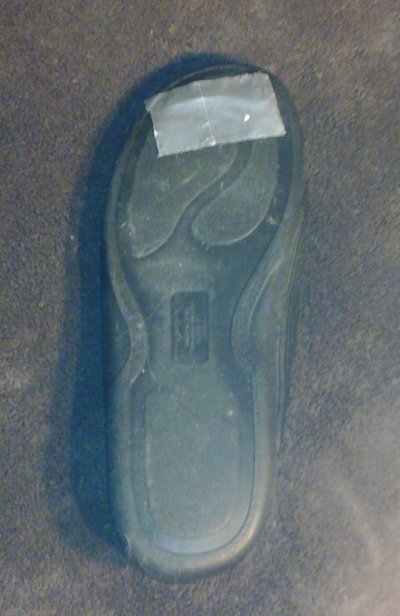
Slipper Before
Before…
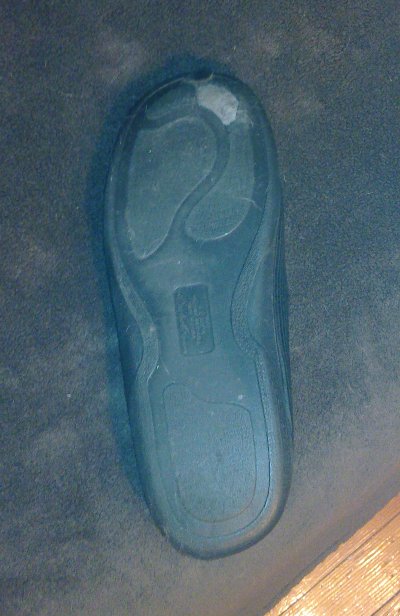
Slipper After
After!

Perfect! Now where’s my hammer?

Ubuntu 11.10 Oneiric OcelotCongratulations to the Ubuntu team on a great release!

This is my first release as a Canonical employee, and while I didn’t directly work on Ubuntu this cycle it was great to see from the inside how excited and proud everyone is about what they’re creating and what they’ve accomplished. On to Precise Pangolin!

P.S. Go get it!

P.P.S. Take the interactive tour!

As my readers (both of them) may have noticed, I’ve not been very good about keeping up with my daily “dear diary”-type posts. I started this little project back in February as a way to make myself write something every day. I’ve pretty consistently failed to do that of late, and as I consider the reasons for that I can only conclude that I just don’t find it interesting.

While I do work for a Free Software company, my work is largely covered by NDA. Largely enough that I don’t feel comfortable even sharing little nonspecific bits of my work on a day-to-day basis because I don’t know if the aggregate could be considered a violation. This eliminates the most interesting part of most days, leaving me with a huge content gap between breakfast and dinner five days a week. I do often attend fun events and do fun things in the evenings, but not enough to really make most days interesting to write about. I’m sure they’re no more interesting to read about.

Additionally, I’ve found that since most of my daily scribblings were one or two sentences per topic anyway, they’re better suited for my StatusNet site, where posting has less intellectual overhead (it’s the same amount of typing/clicking work, but it feels like less of a hassle to post over there).

So, this marks the end of my promise to myself to post something here every day. This site will live on, however, and I may even post something attention-worthy from time to time.

  • Up early; to work.
  • Drove out to Robinson after work for the RiffTrax Live! event. Met up with Greg, Jim, and Jer for dinner at Thai Foon. Perfectly mediocre Thai food, but what can you expect from a suburban shopping center?
  • Then it was on to the show! Unfortunately Jer and Jim hadn’t bought tickets and the show was sold out so Greg and I bade them farewell and went into the theater. The show was hilarious. Jack the Giant Killer is a terrible, terrible movie which fits the bill perfectly for an event like this. The short they showed before the movie, “What is Nothing”, was a depressing little number about two young boys contemplating the essence of nothingness. The most memorable phrase of the evening (which is even more hilarious out of context): “SEIZE THE BONE!”

  • Up early; work time.
  • After work Emily and I biked to Mad Mex in Shadyside/East Liberty for dinner. The Thai curry burrito was calling my name, and it was everything I thought it could be. Emily had a Happy Hippie Quesadilla and she claims it lives up to the name.
  • Biked home full of Mexican/Thai food. Mostly uphill.
  • Took care of some administrative stuff before bed.

  • Up early; saw in-laws off.
  • After work drove out to Bocktown Beer and Grill for the 100th Pittsburgh Beer Meetup. I did a taste test between two potential new Sam Adams beers (an oaked ale and a maple porter — I chose the ale). Greg won 100 craft beer bottles in a raffle (and elected to share most of them, making him the new most popular member of the group). The raffle raised $1,150 for Brewing Up a Cure, which is awesome. Can’t wait for the next meetup.
  • After making sure my three beers (plus two tasters) had run their course I made the long (~30 minutes) journey home and to bed.

  • Up late.
  • Went with Emily and her parents to Construction Junction to drop off some recycling and have a look around. Emily’s father bought some glass plates, I believe to use as windows in a deer hunting shack.
  • Toured a couple of open hoses in Squirrel Hill. One was a $400k McMansion in the Rosemont housing plan, the other was a ranch on Fernwald with brand new floors but wallpaper from the 1970s. Quite a contrast.
  • Late lunch at the Pittsburgh Burger Company in the Waterfront where I got to try the yak. It was pretty tasty, but it was no ostrich.
  • Hopped across the street to see Rise of the Planet of the Apes at Loew’s. This film is much better than the previews suggest. Of course you know how it ends but the buildup is very believable and the little callbacks to the older movies will have you giggling. Also Andy Serkis’ motion-captured performance as Caesar is phenomenal.
  • Home to unwind with some episodes of Bones on Netflix (the only thing we could all agree on) then to bed.